

A used spotting scope from a good maker can give you a top-class view for much less than new, as long as the glass, focus and eyepiece mount are sound. Scopes are solid instruments with few moving parts, so a well-kept one lasts for decades. Before you buy, decide between angled and straight and on the objective size, make sure an eyepiece is included and fits, then check the glass, the focus and the seals. This guide covers each step, plus tripods, digiscoping and what to look for by brand.
Angled or straight: which should I choose?
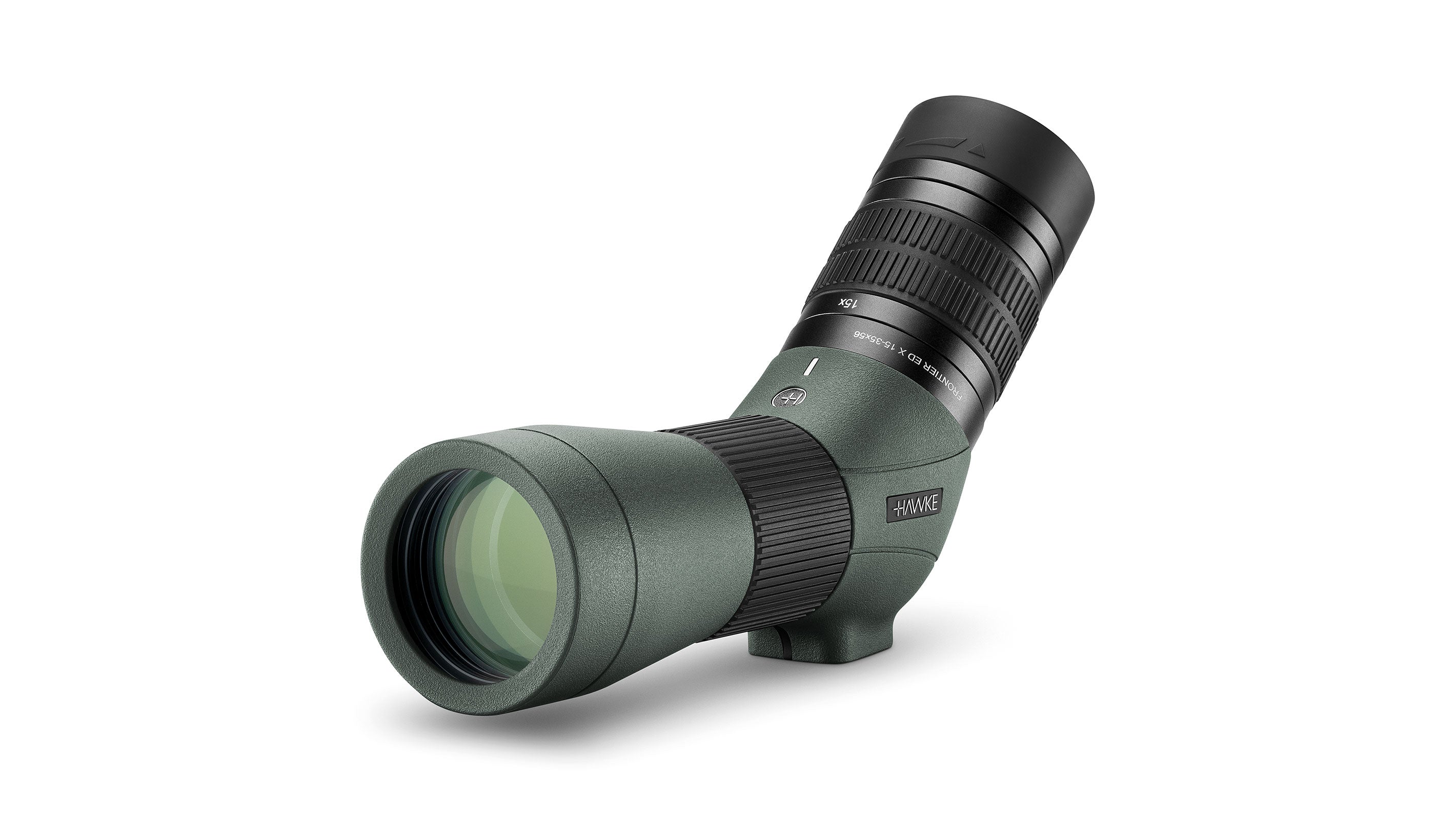
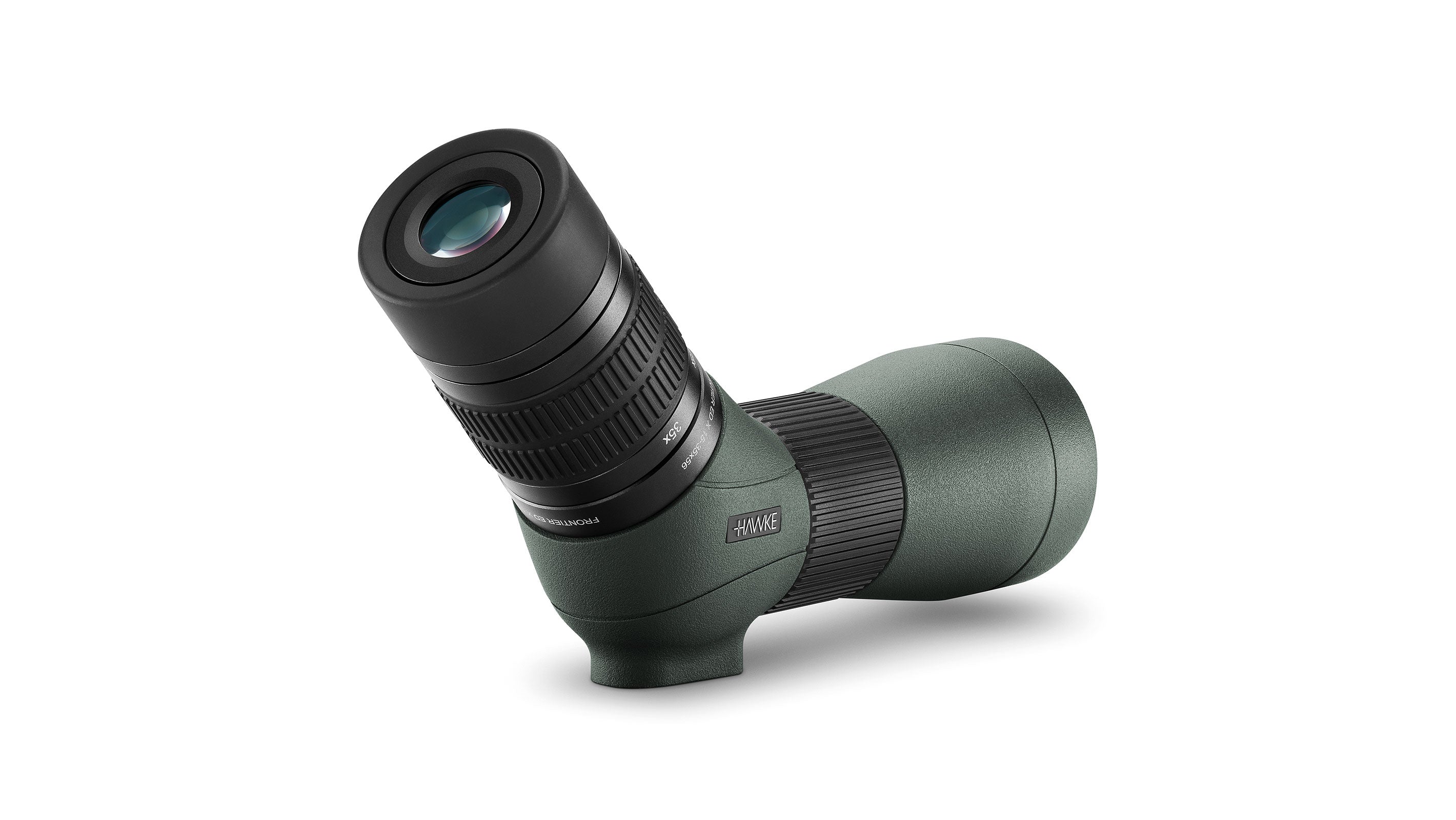
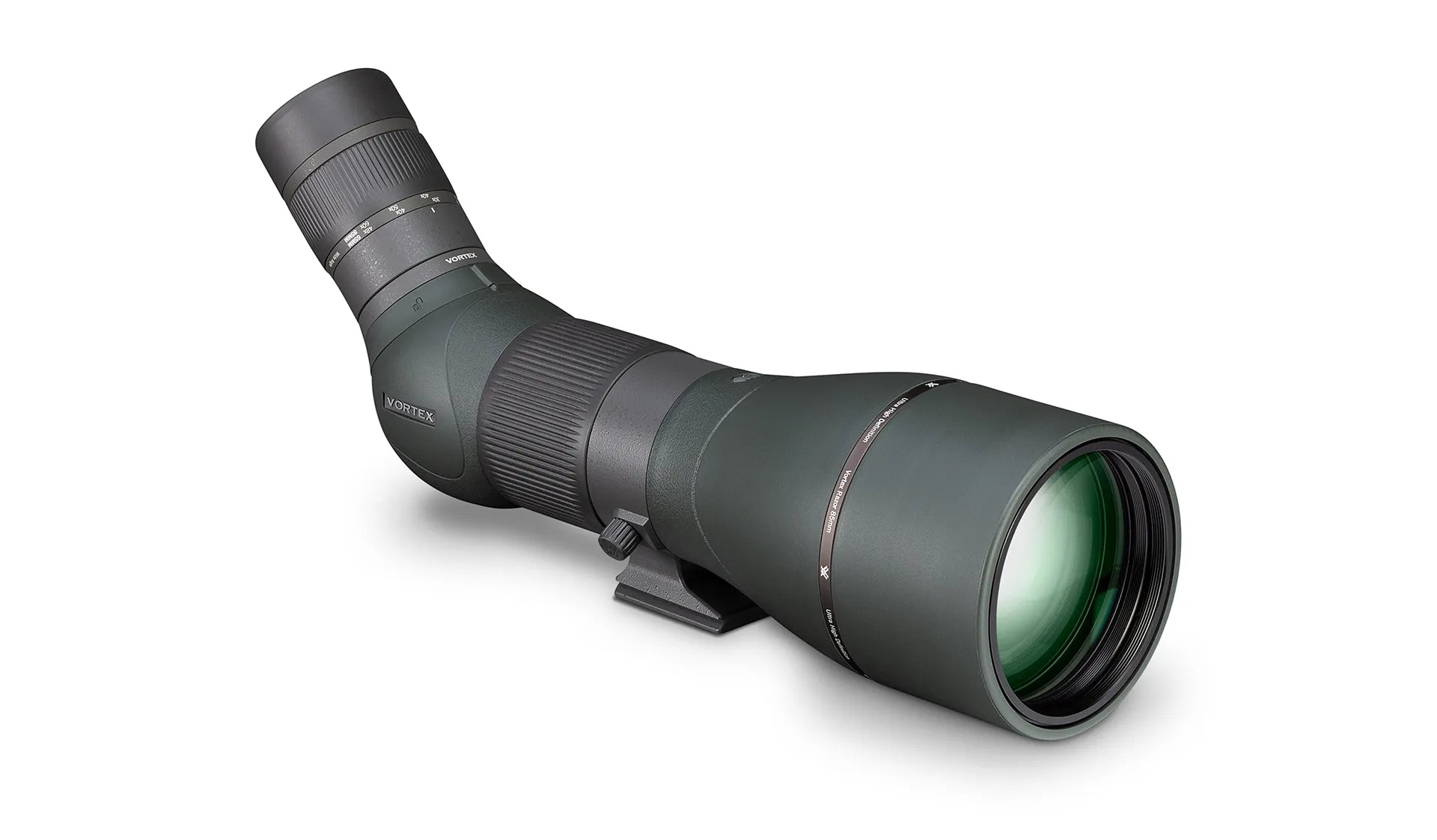
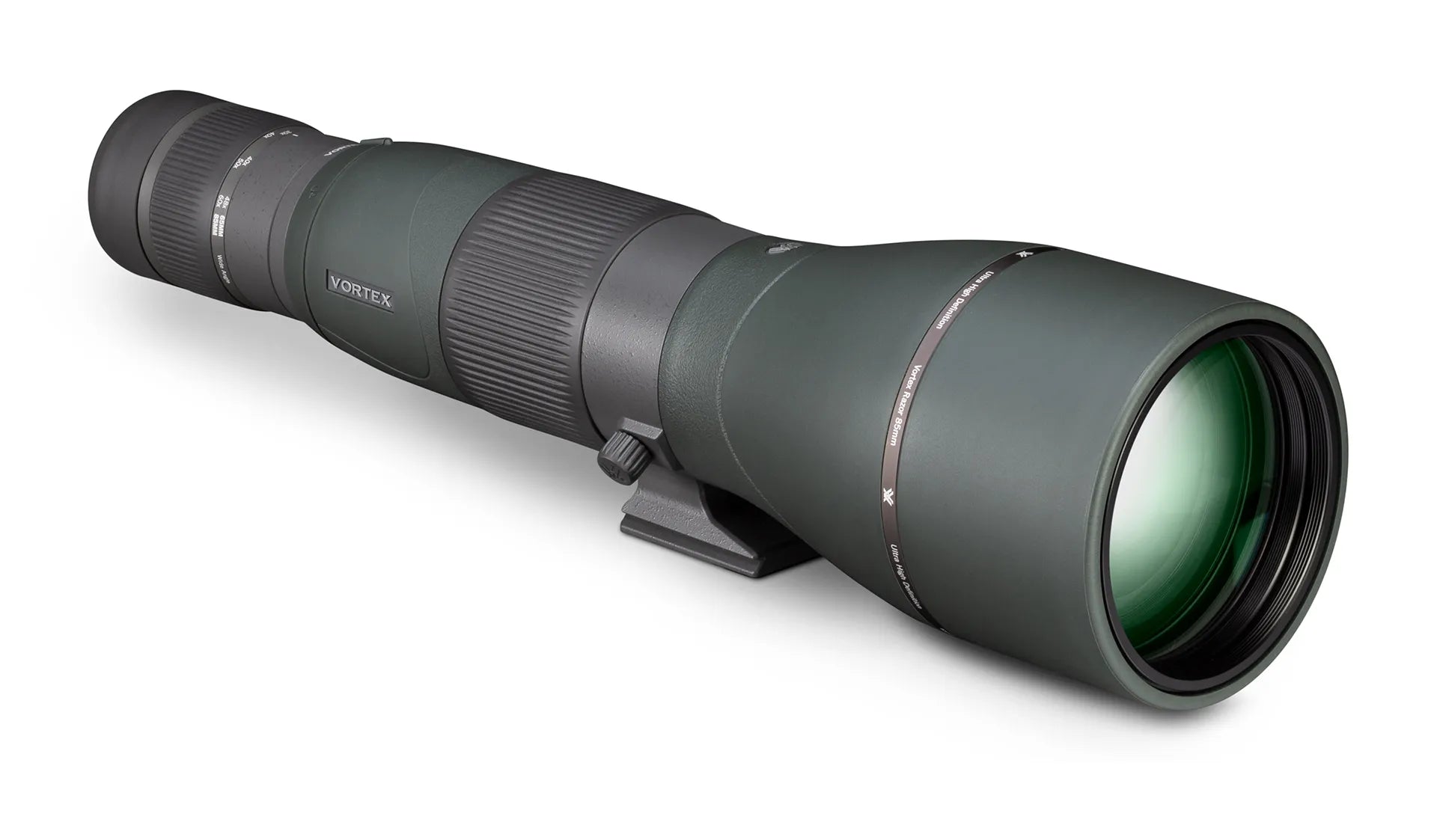
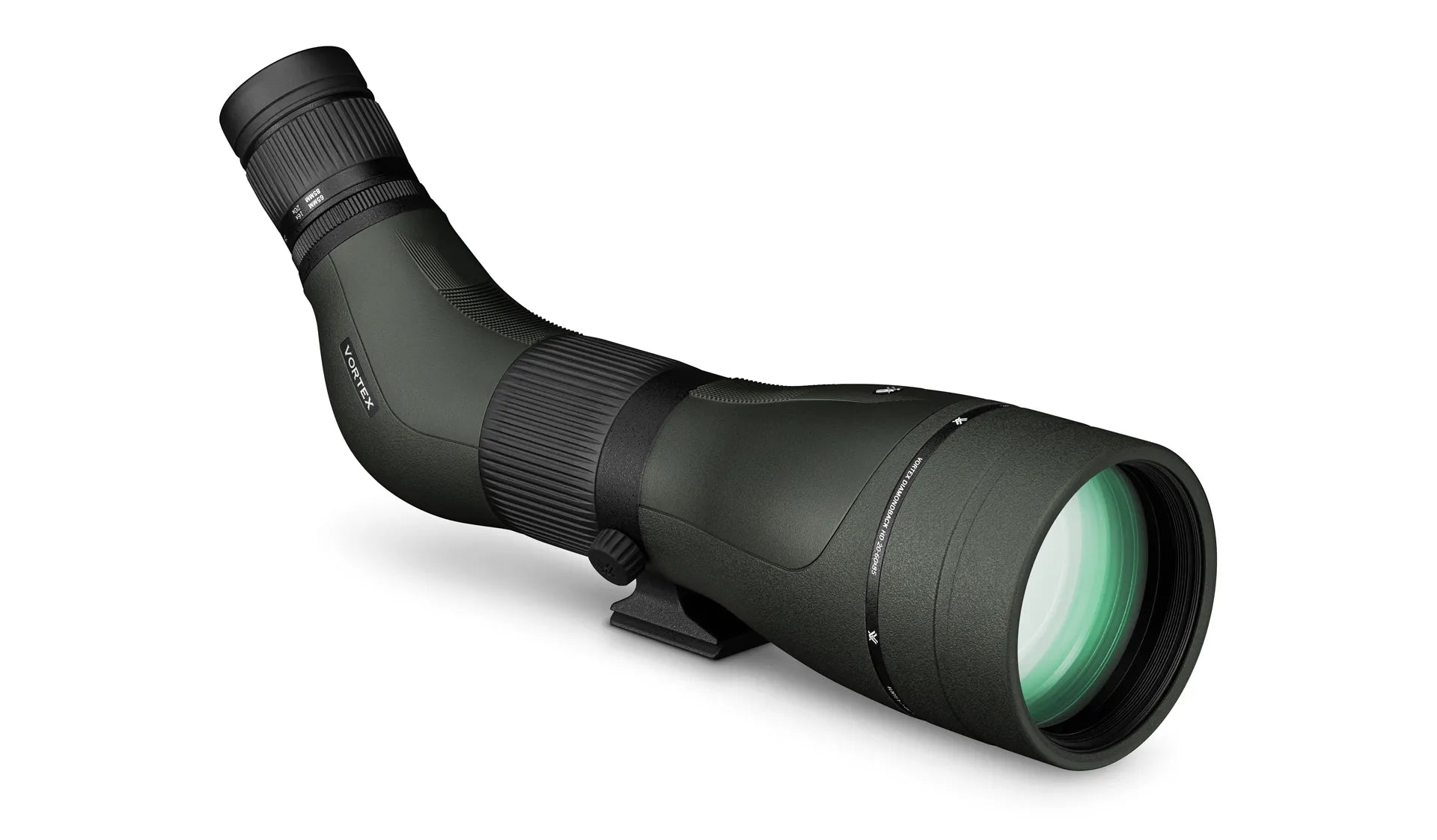
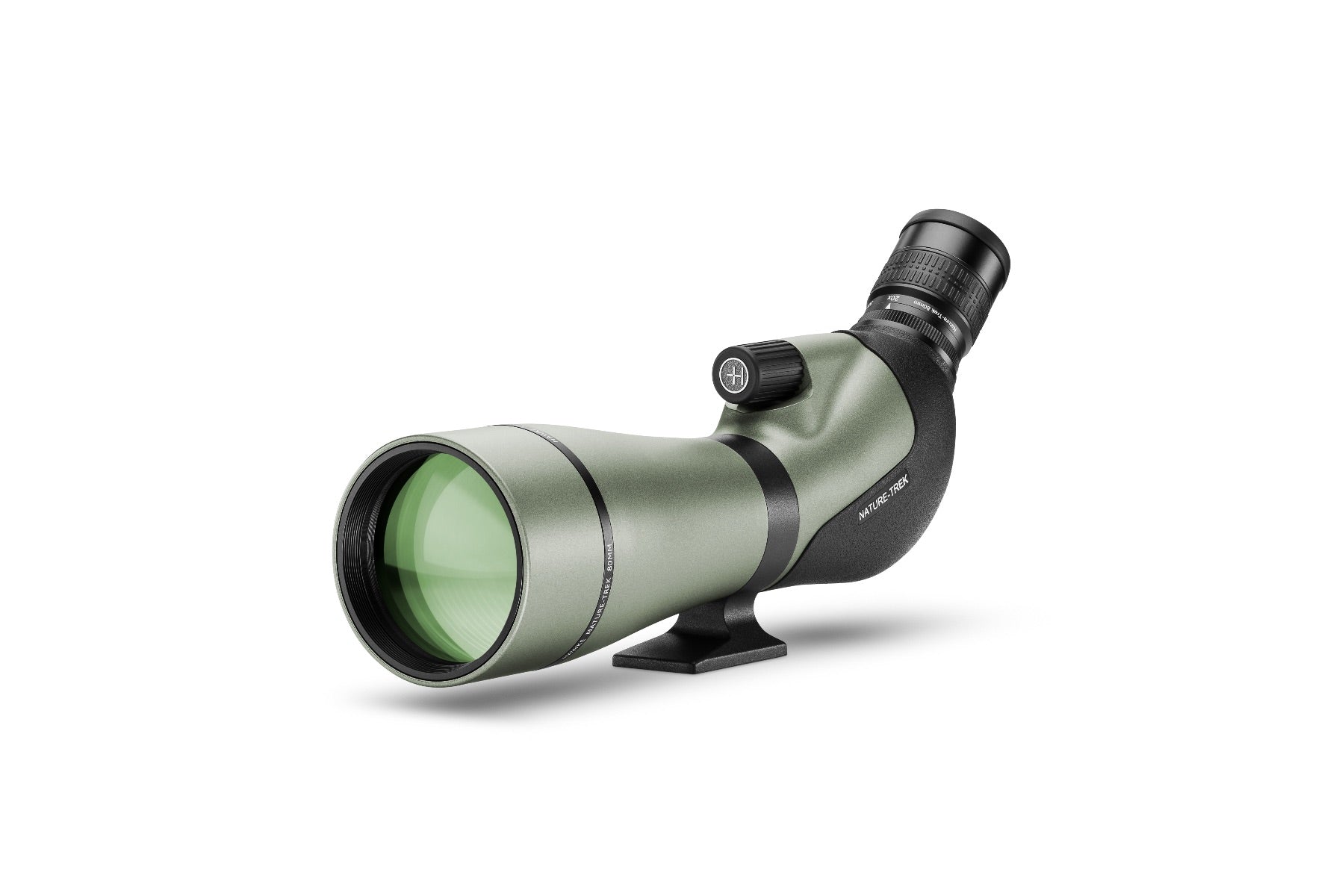
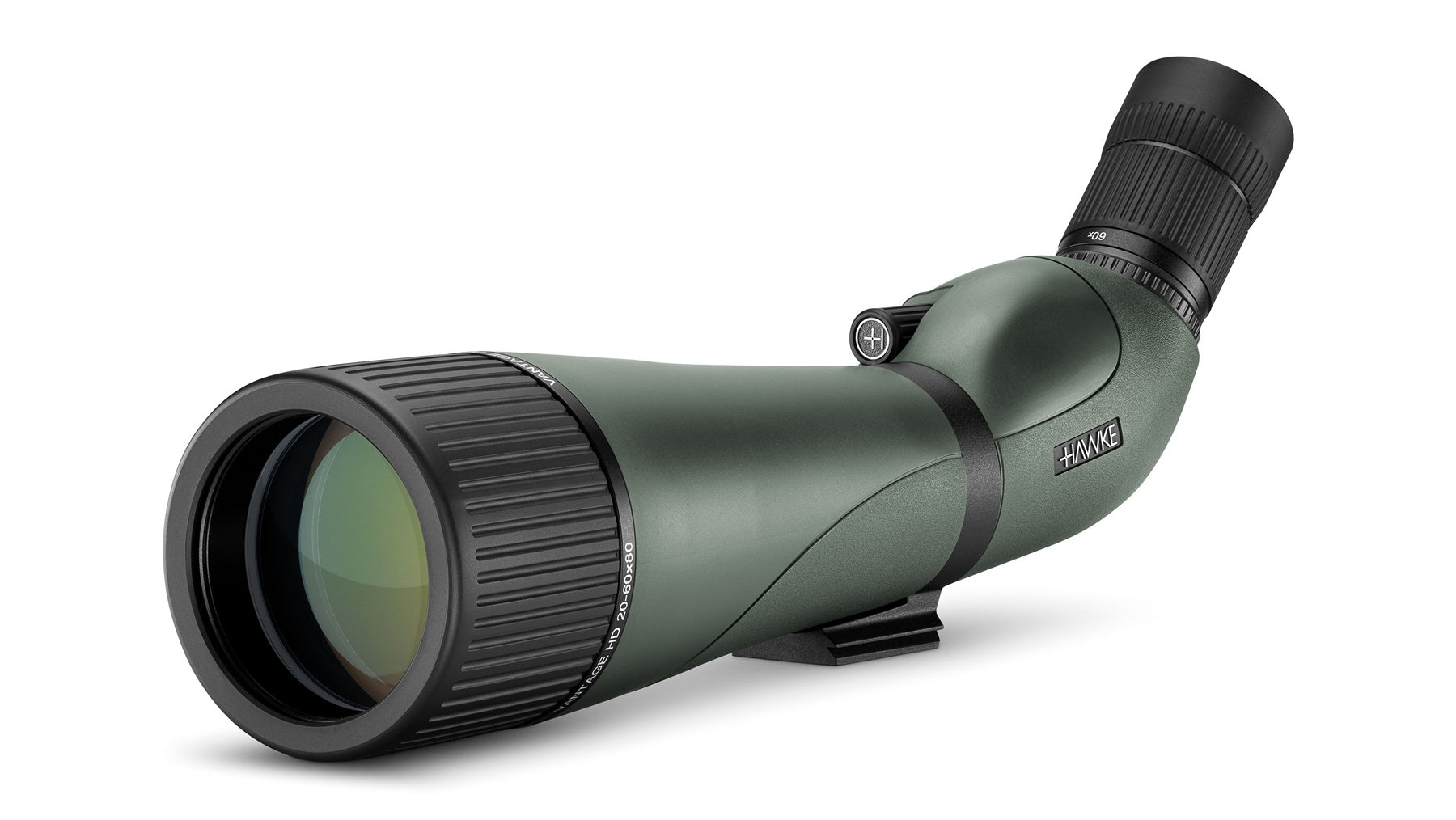
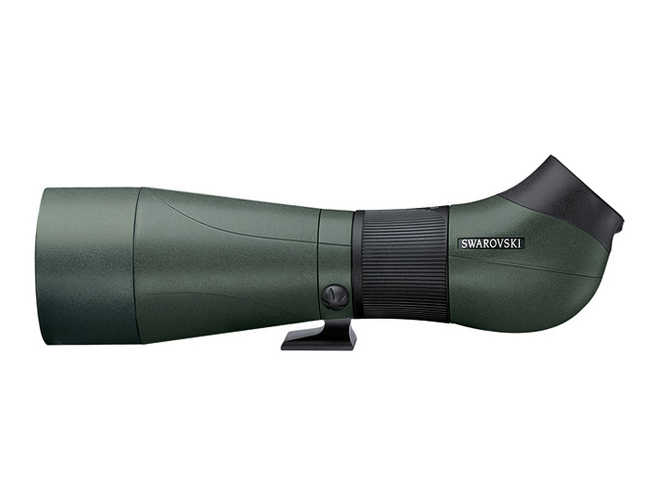
Most birdwatchers choose an angled scope. The eyepiece sits at 45 degrees, so you can set the tripod lower, which makes it steadier in wind. It is more comfortable for birds above you, on cliffs or in trees, and easier to share with people of different heights.
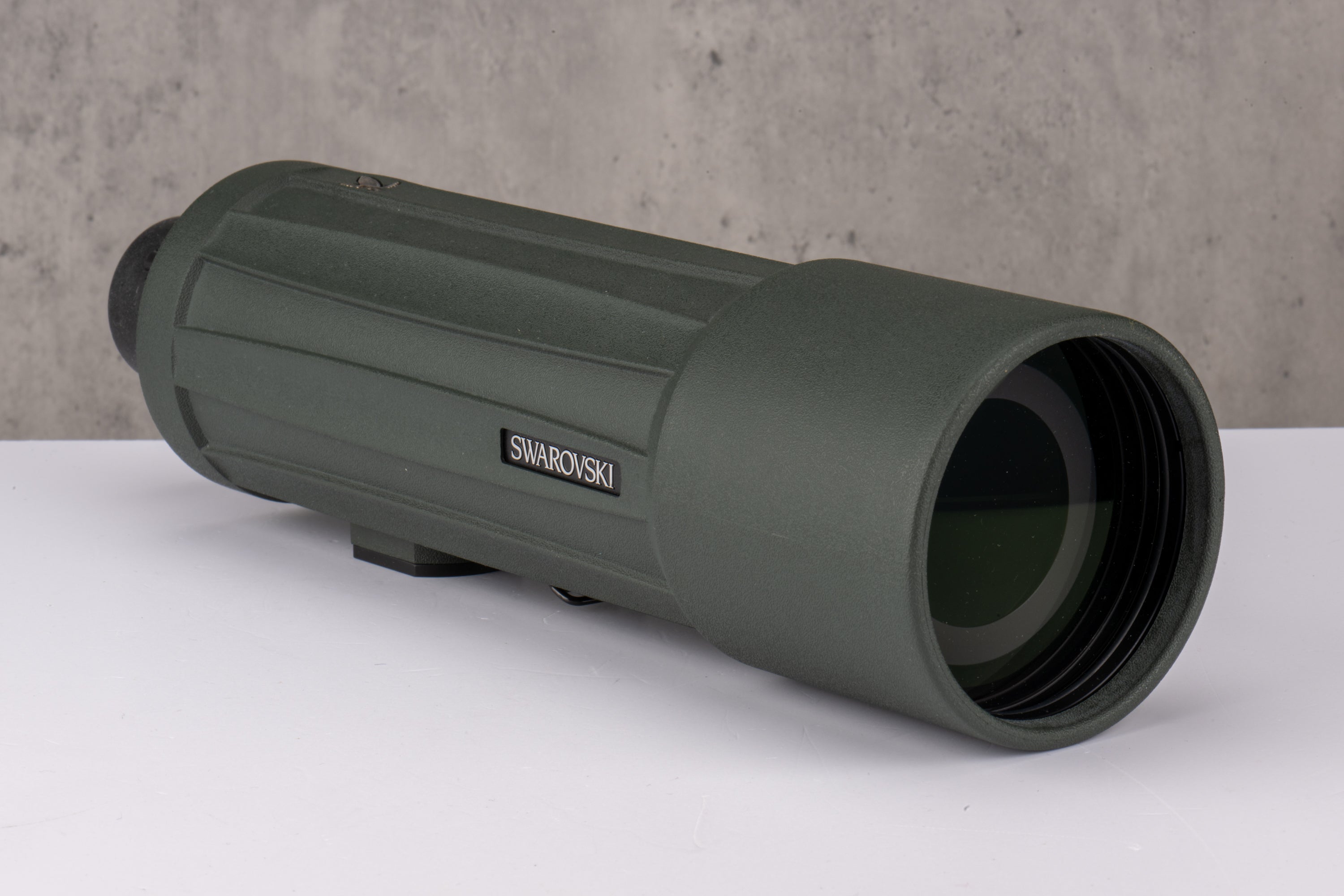
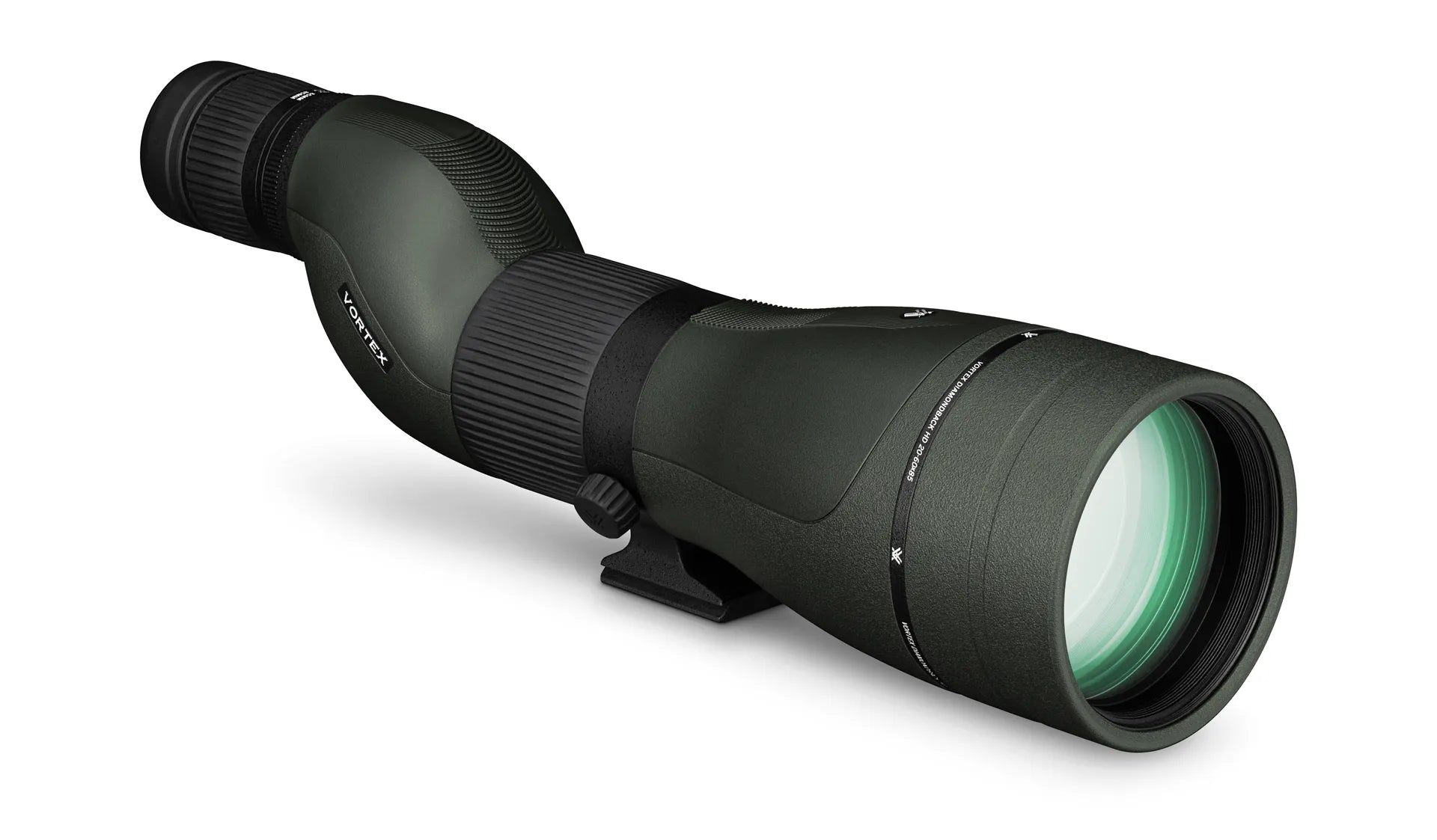
A straight scope is quicker for finding a bird, because you look along the barrel at it. It also suits a car window mount and looking down from a hide or a height. If you mostly scope from the car, straight is worth a look. If not, start with angled.
What objective size do I need?
The objective is the front lens. A bigger one gathers more light, so the view stays brighter at higher zoom and in poor light. At 30x, an 85mm scope gives a 2.8mm exit pupil; a 60mm scope gives 2mm. The cost is weight, bulk and price.
| Objective | Suits | Body weight | Trade-off |
|---|---|---|---|
| 50–60mm | Travel, long walks, carrying all day | approx. 0.8–1.2kg | Dimmer at high zoom and at dawn and dusk |
| 65–77mm | A middle ground for local patches | approx. 1.1–1.5kg | Less reach in poor light than 85mm |
| 80–95mm | Estuaries, reservoirs, seawatching, low light | approx. 1.5–2kg | Heavier, needs a sturdier tripod, costs more |
If you walk a long way to your sites, a 60mm scope you always take beats an 85mm you leave at home.
Fixed or zoom eyepiece, and will it fit?
Most scopes now use a zoom eyepiece, such as 20–60x or a wide-angle 25–50x. In practice you spend most of your time at the low end. At the top end, heat haze and fading light limit what you see. Fixed eyepieces, such as a 30x wide-angle, give a wider and slightly brighter view. They are less common now but turn up used.
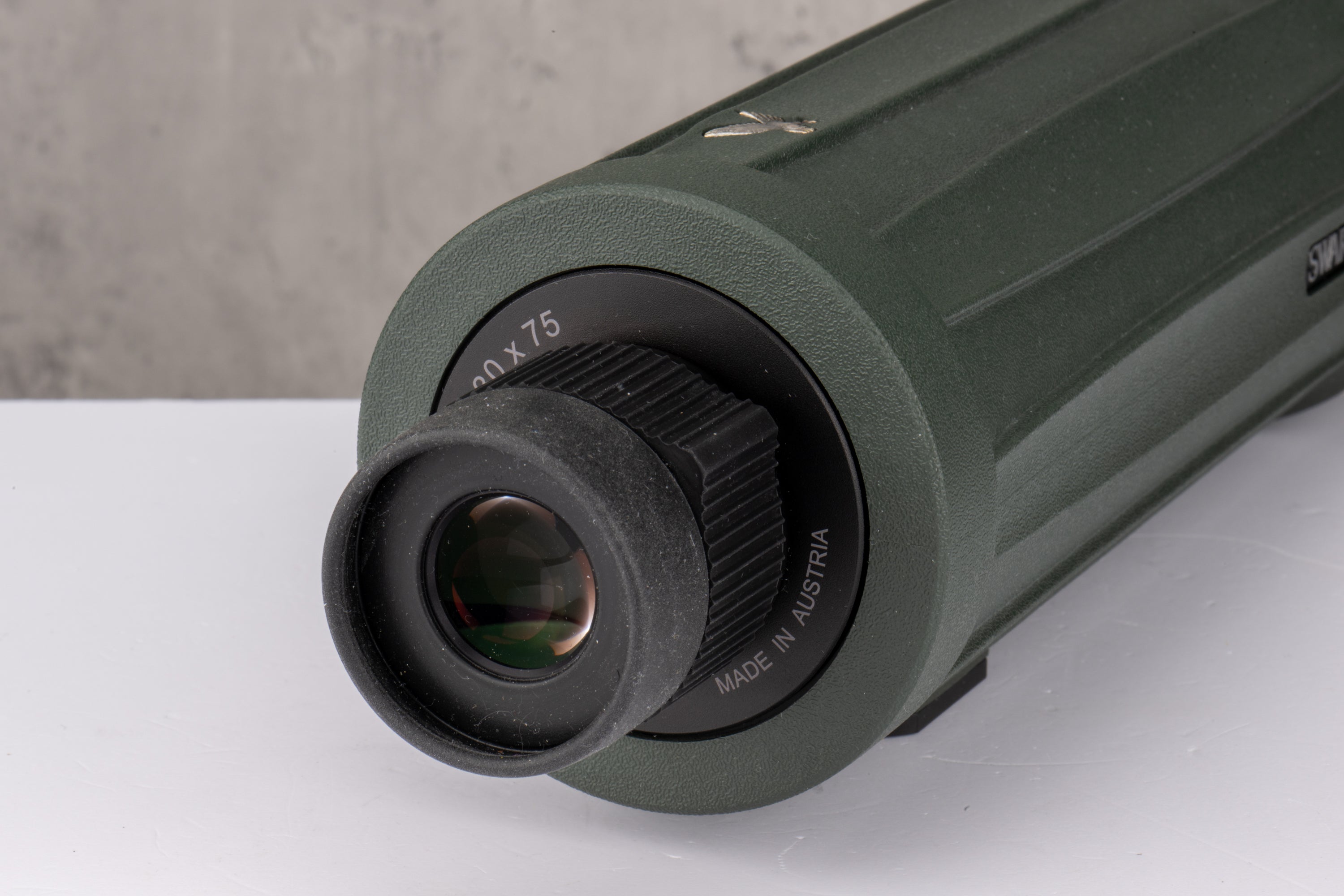
On many scopes the eyepiece comes off, held in place by a bayonet mount. Eyepieces usually fit other bodies in the same range and generation. They rarely fit across brands, and not always across generations of the same brand. Some entry-level and mid-range scopes have a zoom eyepiece fixed in place, which keeps things simple. Check the maker's spec for the model you're looking at.
Before you buy, check:
- The exact model of the body and the eyepiece.
- That the eyepiece is included. A body on its own is only a bargain if you already own a matching eyepiece.
- That the eyepiece is designed for that body, not just a fit that happens to click in.
Does ED or HD glass matter?
ED stands for extra-low dispersion. It cuts colour fringing, the purple or green edge you see on a gull against a bright sky, and keeps the image sharper at high zoom. HD is a maker's label that usually means ED or fluorite glass. On an 80mm or larger scope it makes a clear difference. On a 50–60mm scope at modest zoom it shows less.
Many ranges came in a standard and an ED or fluorite version, such as the Swarovski ATS 80 and ATS 80 HD, or the Kowa TSN-821 and TSN-823. Check which one you are looking at. The standard version is usually cheaper used and can still give a very good view.
What to check on a used spotting scope
- The glass. Look at the objective and the eyepiece lens in good light, from both ends. Fine cleaning marks on the outside rarely show in the view. Haze, fungus (thin, cobweb-like threads) or marks on the inner surfaces are serious. A little internal dust is normal.
- The focus. Turn the focus through its whole range. It should be smooth, with no grinding, stiff spots or slack. If there is a coarse and a fine focus, check both. Make sure it reaches sharp focus on distant and close subjects.
- The eyepiece bayonet. The eyepiece should click in firmly with no wobble, and the release button should work. Turn the zoom through its range: it should be smooth, and the image should need only a small touch of refocusing.
- The armour and body. Worn armour is cosmetic. Dents on the body or the objective end can mean a drop, which can shift lens elements. Check that the image is crisp in the centre at high zoom.
- The seals. Any fog or moisture inside the scope means the seals have failed. So does condensation inside after it comes in from the cold.
- The tripod foot and collar. The thread in the foot should be clean and not stripped. If the body has a rotating collar, it should turn and lock.
- What's included. A stay-on case, lens caps and the original box all add value.
Tripods and heads
A scope is only as steady as what it stands on. Look for a tripod that reaches your eye height with a straight scope, or chest height with an angled one, without raising the centre column all the way. Aluminium legs cost less; carbon fibre is lighter and damps vibration better. A fluid or pan head with one handle lets you follow a bird smoothly. A quick-release plate saves time. Heavier 80mm and larger scopes need a sturdier head. Bring your scope in and we can show you tripods and heads that suit it, or browse scope eyepieces and accessories.
Can I take photos through a scope?
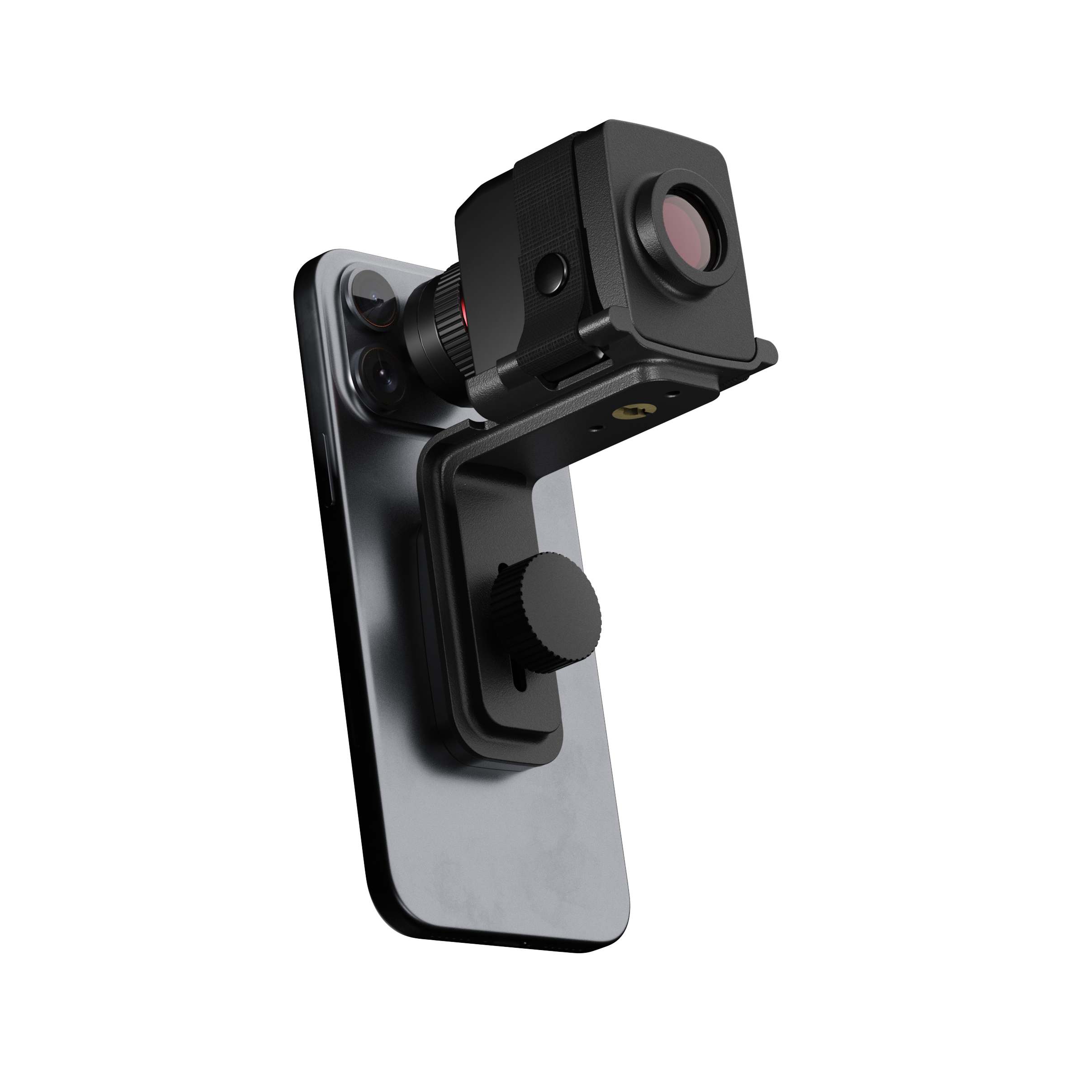
Yes. Digiscoping means holding a phone or camera to the eyepiece. An adapter that matches your eyepiece model makes it far easier: makers sell their own, and universal clamps fit many scopes. Use the lowest zoom, a steady tripod and the phone's timer. If a used scope comes with an adapter, check which eyepiece it fits.
Used spotting scopes by brand: what to look for
- Swarovski. The ATX (angled) and STX (straight) are modular: one eyepiece module fits 65, 85 and 95mm objective modules. Older ATS, STS, ATM and STM models use a different eyepiece fit, so check before buying a spare.
- Kowa. Prominar models use fluorite glass. The TSN-880 and TSN-770 series are popular with birders, and the TSN-550 series is a compact travel option. Check which eyepiece is included.
- Opticron. The MM4 travel scopes, plus the larger ES and HR models, with a wide choice of eyepieces. Good value new or used.
- Zeiss. The Harpia has its zoom at the objective end, giving a wide view at low power. The Diascope and Conquest Gavia are often good value used.
- Hawke and Vortex. Hawke's Nature-Trek, Endurance and Frontier ranges and Vortex's Diamondback, Viper and Razor cover a wide spread of prices. Ask what the maker's warranty covers for a second owner.
These brand pages show our new stock. For used, see used spotting scopes. Choosing binoculars too? Read our guide to choosing binoculars for birdwatching or buying used binoculars.
How do I know if the price is fair?
Compare it with what the same model costs new today, then allow for age, condition and what's included. The eyepiece is a large part of the value, so a body without one should be priced to match. Premium scopes hold their value well, so a very low price on a top model is a warning sign.
Buying privately or from a dealer?
Private sales can be cheaper, but you usually can't check the scope properly, and there's rarely a warranty or an easy return. Every used scope we sell is tested and graded in our Harrogate shop and has its own warranty, set when we test it and shown on its listing. Our notes always mention any marks on the glass. See how we grade used kit.
Try it in the shop
Look through a scope yourself before you buy. At our shop on Beulah Street, Harrogate, you can compare used and new scopes side by side. Book a try-out and we'll have a shortlist ready, or drop in Monday to Saturday, 9:30am to 5pm. Browse used spotting scopes or new spotting scopes first.
Selling or upgrading?
We buy used spotting scopes and binoculars, and take them in part-exchange against new or used kit. Get a part-exchange quote.