
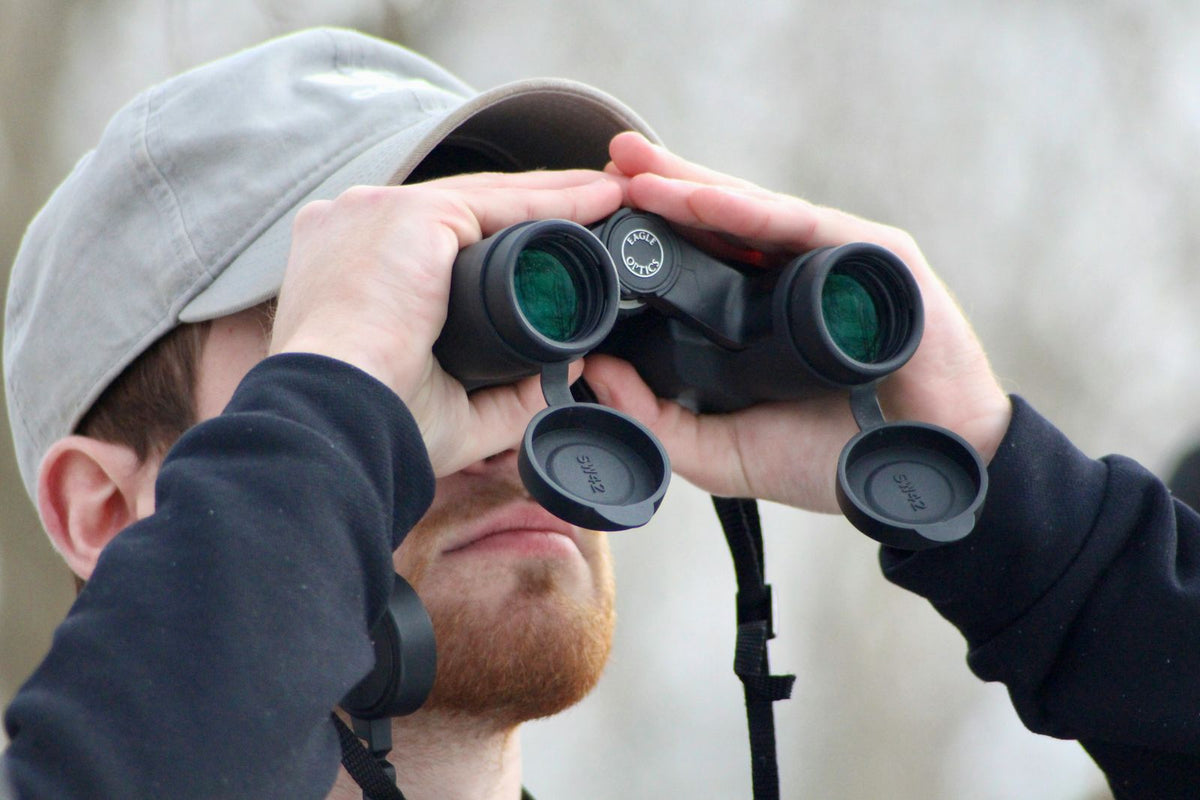
A tested pair of used binoculars from a dealer is often better value than a new mid-range pair. Good binoculars are built to last for decades, so a pre-owned Swarovski, Zeiss or Leica can give you a sharper, brighter view for the same money as a new budget pair. Before you buy, check five things: the glass, double vision, the focus, the hinge and seals, and who you're buying from. This guide covers each one, which size to choose and what to look for by brand.
In short
- A tested used Swarovski, Zeiss or Leica often beats a new mid-range pair for the same money.
- Check the glass, double vision, the focus, the hinge and seals, and who you buy from.
- 8x42 suits most people; 10x42 suits open country; 8x32 is lighter to carry all day.
- Look through them before you buy if you can, and ask what warranty comes with them.
Is it worth buying used binoculars?
Usually, yes, as long as the optics are in good condition. Most of what you pay for in a premium pair is the glass, the coatings and the build, and those last when they've been looked after. A scuff on the armour doesn't change the view.
If you can afford new and want the latest model and the full manufacturer warranty, new is the simpler choice. If you'd rather have a better class of binocular for your budget, used is worth a look. See the used binoculars we have in stock, or compare them with new binoculars.
What to check when buying used binoculars
- The glass. Look through them, then at the lenses from both ends in good light. Fine scratches on the outside rarely show in the view. Haze, fungus (thin, cobweb-like threads inside) or marks on the inner surfaces are serious and costly to fix. A little internal dust is common and usually doesn't affect the view.
- Double vision. Look at a distant straight edge, such as a roofline, for a minute. If the two images don't merge into one, or your eyes feel strained, the binoculars are out of alignment (collimation). That needs a specialist repair, which can be expensive.
- The focus. Turn the focus wheel through its whole range. It should be smooth, with no grinding, stiff spots or play. Check that the dioptre adjustment, which balances your two eyes, moves and stays put.
- The hinge, eyecups and seals. The hinge should hold the width you set. Twist-up eyecups should click and stay in place. Rubber armour shouldn't be peeling. Fogging or moisture inside the barrels means the waterproof seals have failed.
- Who you're buying from. Ask how the binoculars were checked, whether there's a warranty and how returns work.
Shop tip: test for double vision at a window. Pick a distant aerial or roofline, hold the binoculars steady and look for a minute. If the image doubles or your eyes start to ache, walk away.
Which size of binoculars should I buy?
The two numbers are the magnification and the width of the front lenses in millimetres. An 8x42 makes things look 8 times closer through 42mm lenses. Divide the second number by the first to get the exit pupil: the bigger it is, the brighter the view in poor light. An 8x42 has a 5.25mm exit pupil; a 10x42 has 4.2mm.
| Size | Best for | Typical weight | Trade-off |
|---|---|---|---|
| 8x25, 10x25 | Pocket, travel, concerts | approx. 250–350g | Dim at dawn and dusk; small field of view |
| 8x32, 10x32 | Walking, travel, all-day carry | approx. 450–650g | Less bright than 42mm in the last light |
| 8x42 | All-round birding and nature, woodland | approx. 650–850g | The safest first choice for most people |
| 10x42 | Open country, estuaries, coasts | approx. 650–850g | Narrower view and more hand shake than 8x |
| 10x50, 12x50 | Low light, long distance, stargazing | approx. 900g and up | Heavy to carry all day |
Not sure? 8x42 suits most people. The quickest way to decide is to try a few side by side in our shop.
Used binoculars by brand: what to look for
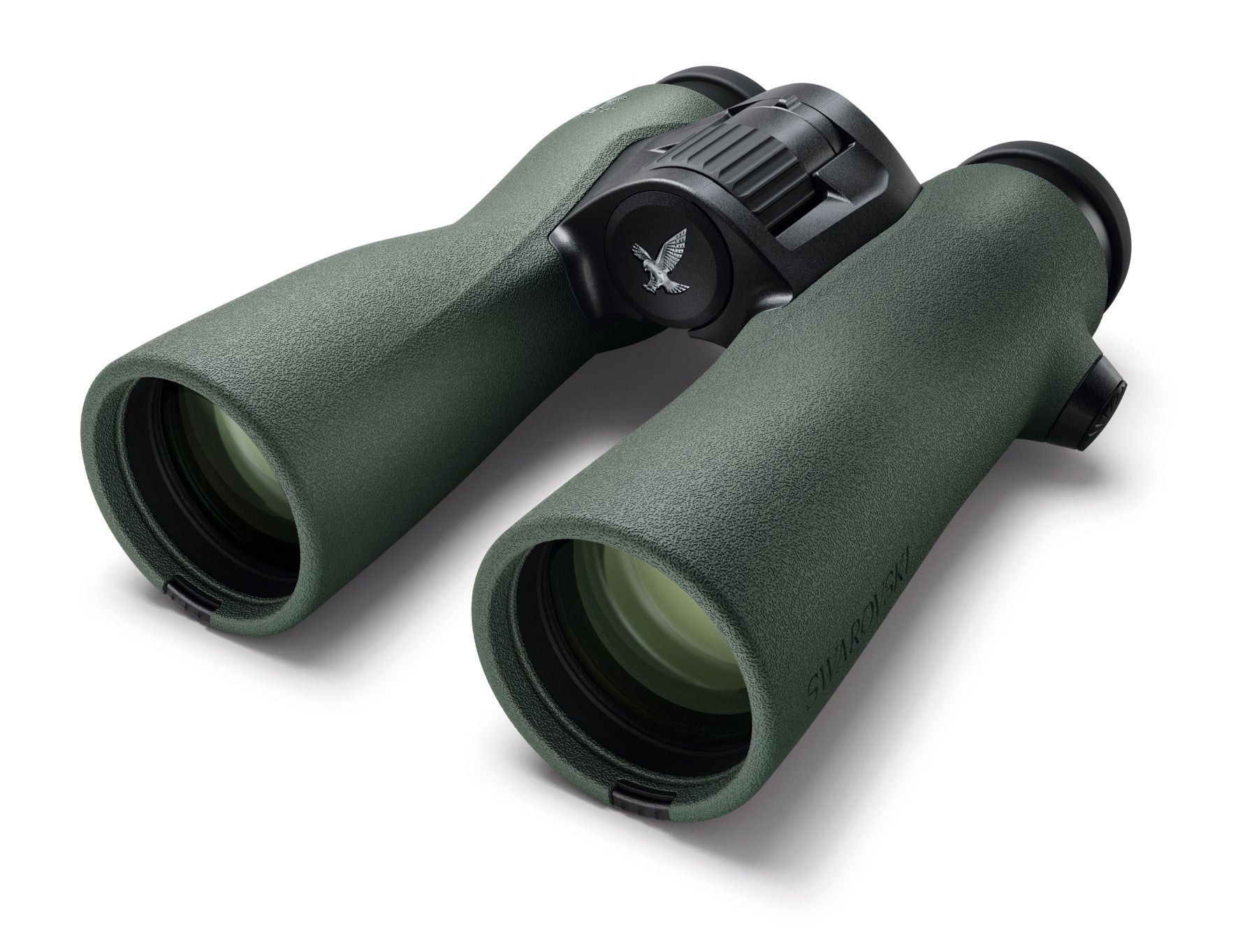
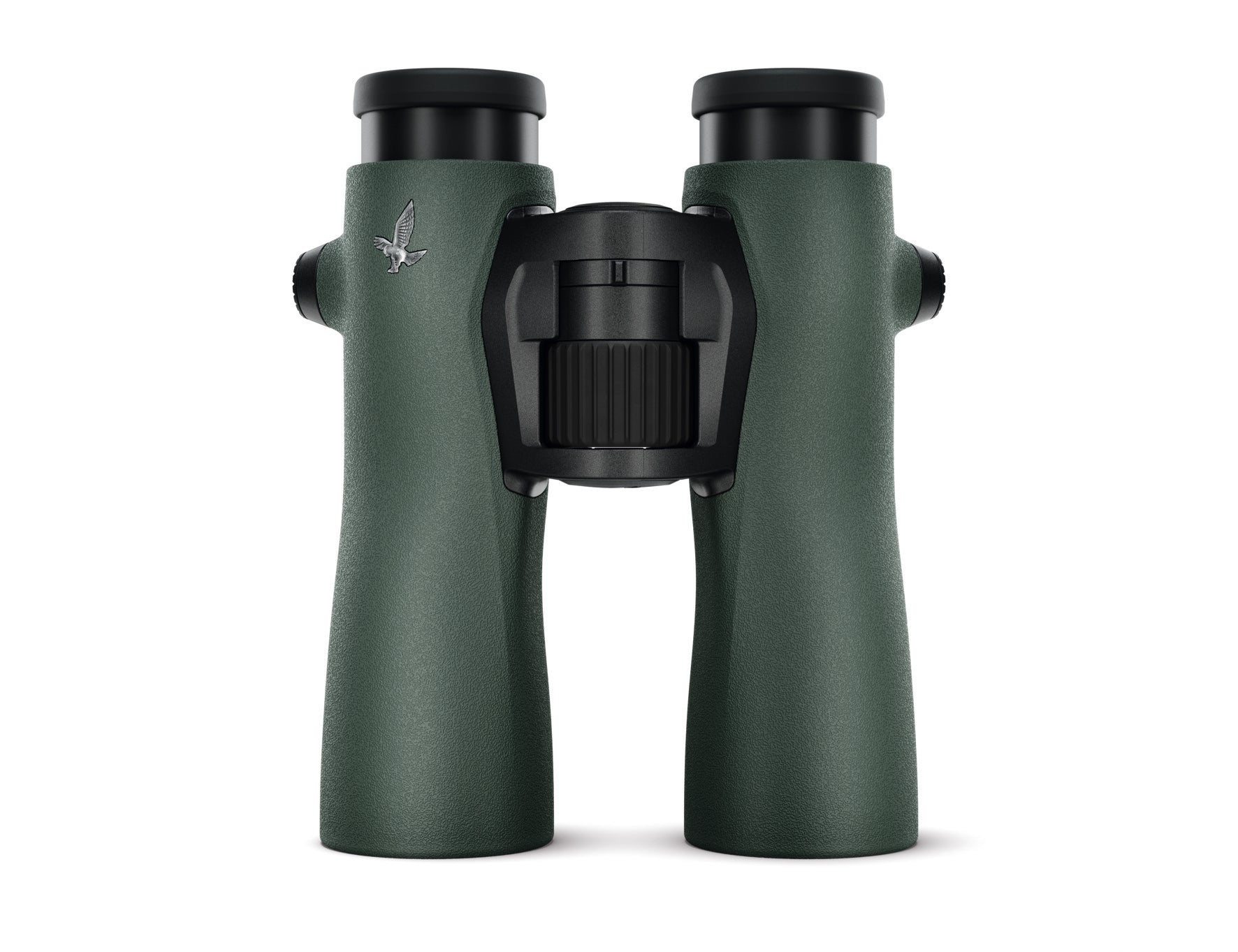
- Swarovski. The EL is the long-running flagship roof-prism range, and older EL models are still superb. The current top models are the NL Pure and the EL FieldPro. The SLC is a tough, slightly smaller alternative, and the Habicht is a long-running classic with a famously clear view. Check the armour and eyecups on older pairs.
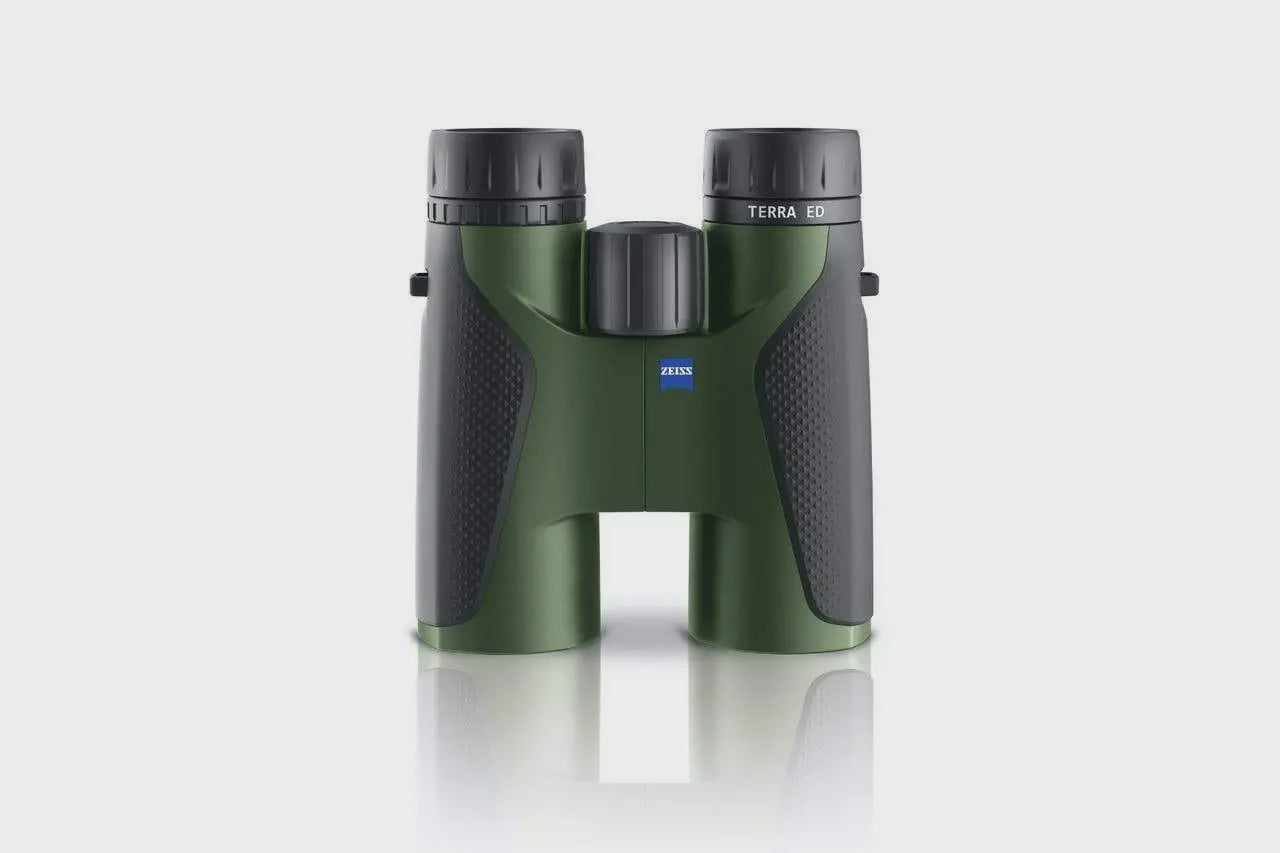
- Zeiss. Victory is the top range (SF, HT and FL among recent models, plus the lighter Victory SFL), Conquest HD is a step down at a much lower price, and Terra ED is the entry level. A used Victory or Conquest is often outstanding value.
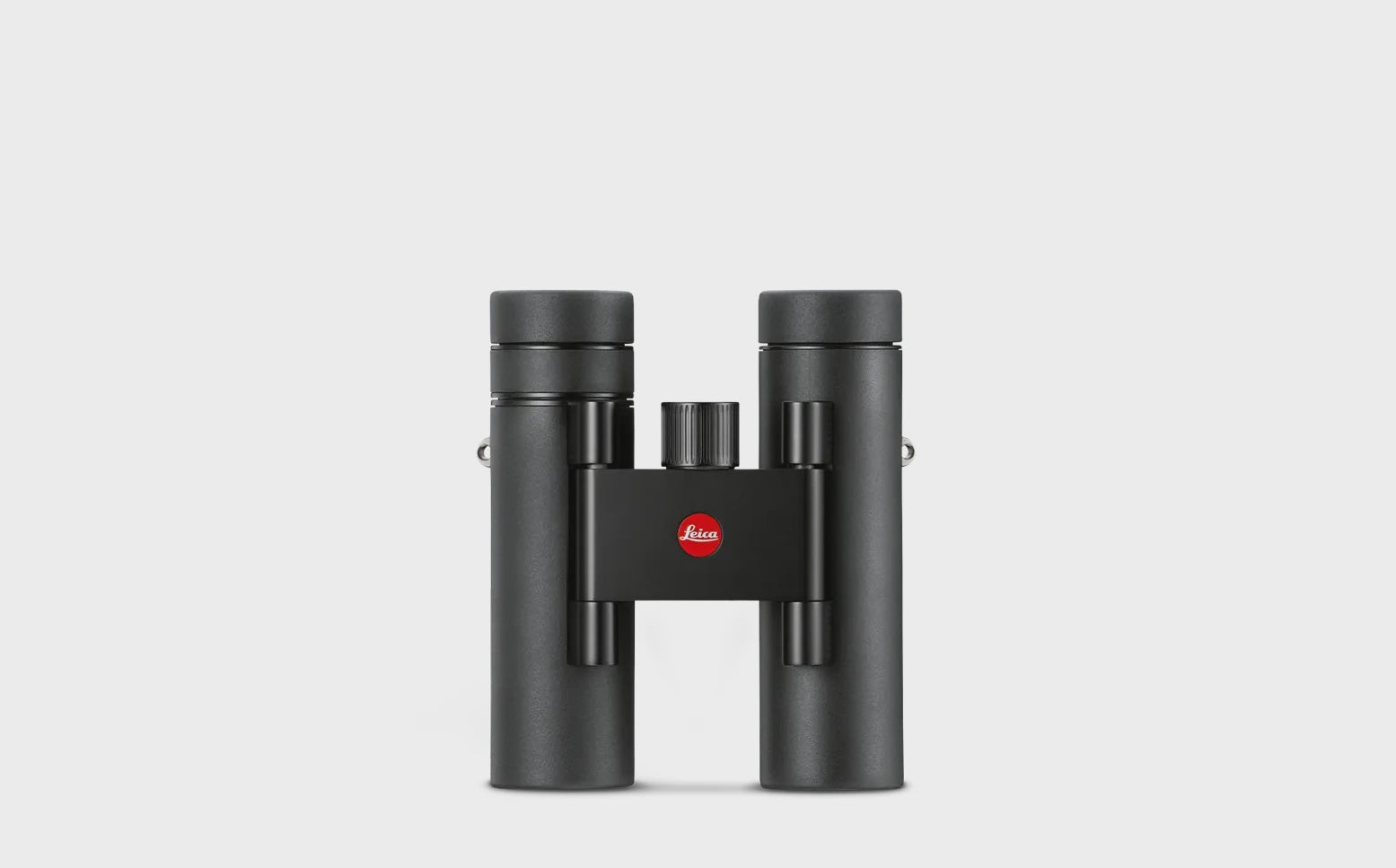
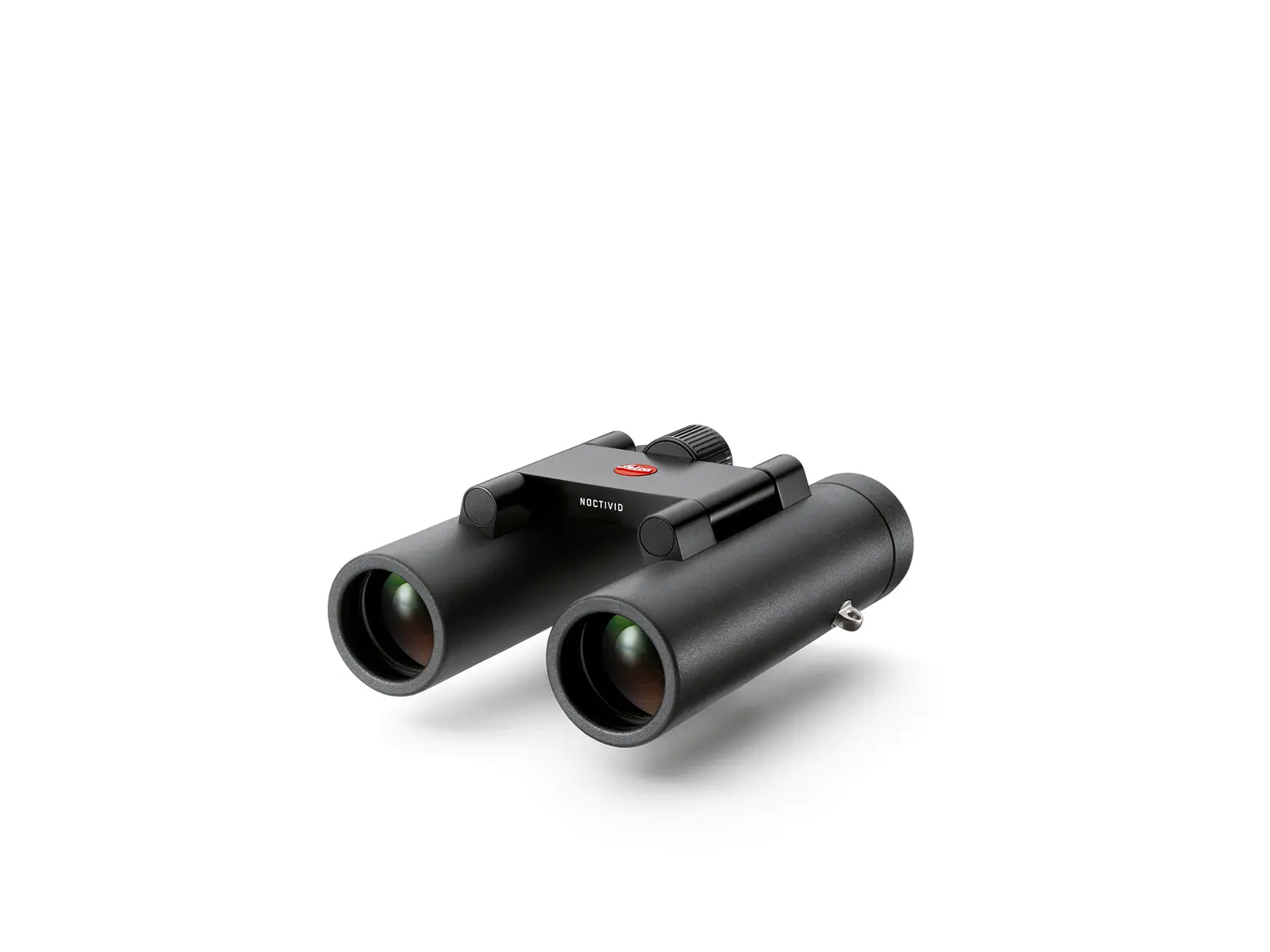
- Leica. Noctivid and Ultravid are the premium ranges; Trinovid has been made in several generations, so check which one you're looking at. Leica bodies are built to last, so condition of the glass matters most.
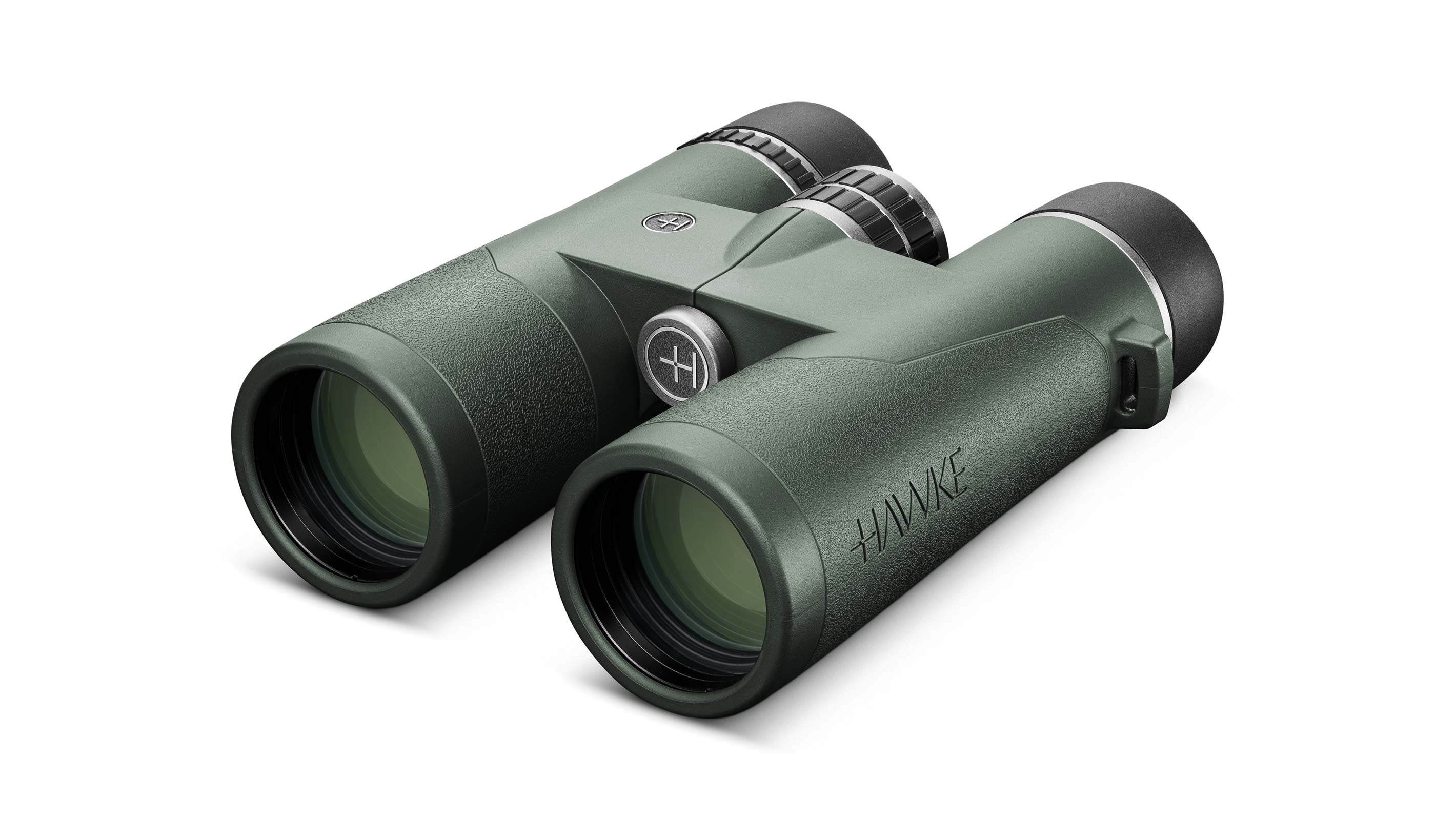
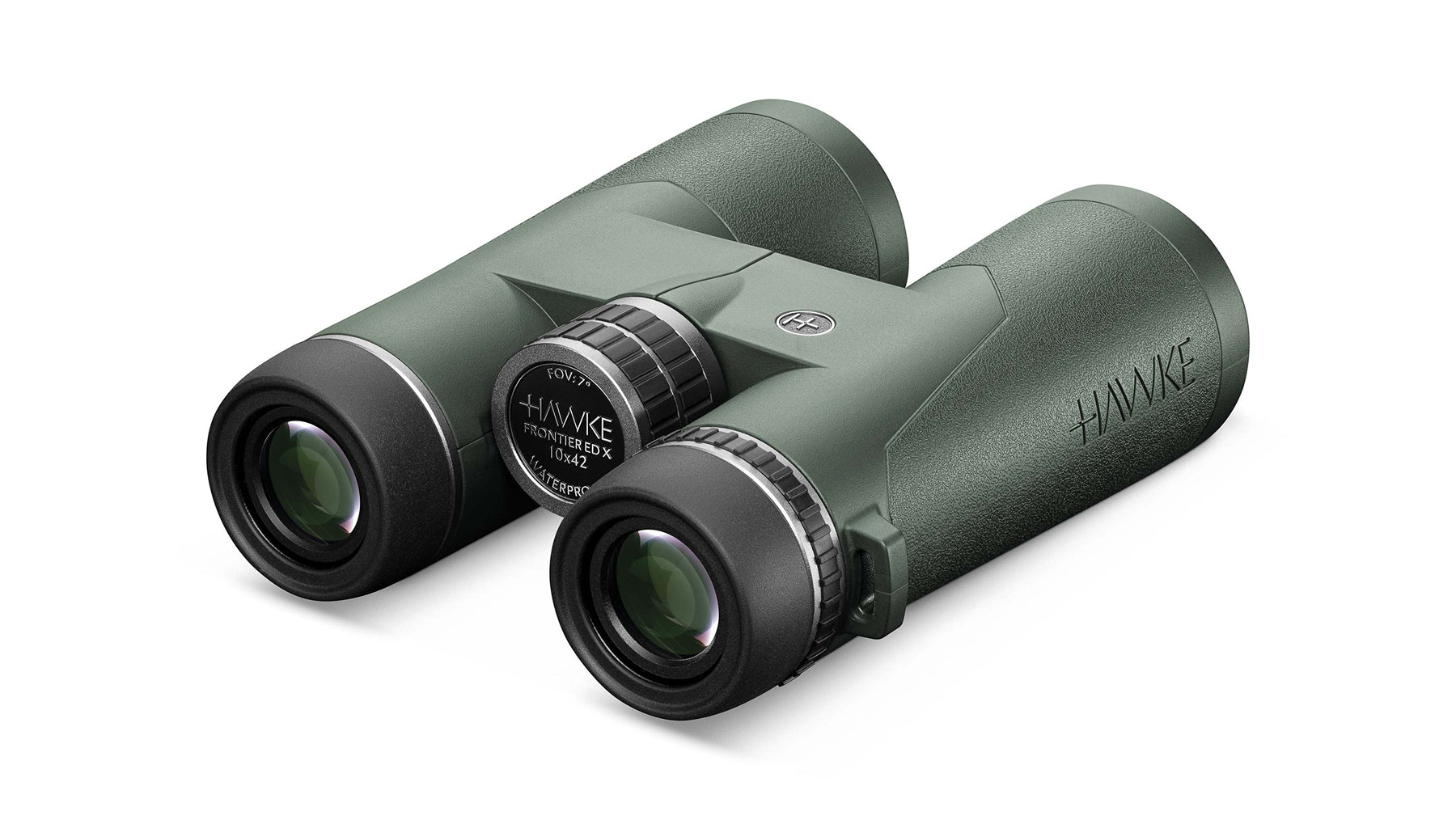
- Opticron and Hawke. UK-based brands with a wide spread of prices, from first binoculars to serious birding glass, such as the Hawke Frontier ED X. Good choices if you want a well-made pair without a premium price, new or used.
- Nikon, Kite and Vortex. Nikon's Monarch range is a popular mid-price choice. Kite and Vortex are strong on build and warranty support, so ask what the maker's warranty covers for a second owner.
How do I know if the price is fair?
Compare it with what the same model costs new today, then allow for age, condition and what's included, such as the case, strap and lens covers. Older models with the same optics can be excellent value. Prices vary with brand, scarcity and condition, so compare a few listings before you decide. If a price looks too good to be true, it usually is.
Buying privately or from a dealer?
Private sales and auction sites can be cheaper, but you usually can't check the binoculars properly first, and there's rarely a warranty or an easy return. A dealer should test each pair, describe its condition honestly and stand behind it.
Every used pair we sell is tested and graded in our Harrogate shop and comes with its own warranty, set when we test it and shown on its listing. Our notes always mention any marks on the glass. See how we grade used kit.
Try them before you buy
If you can, look through them yourself. At our shop on Beulah Street, Harrogate, you can compare used and new pairs side by side. Book a try-out and we'll have a shortlist ready for your budget and use, or drop in Monday to Saturday, 9:30am to 5pm. If you can't visit, ask us for photos of the exact pair you're interested in.
Selling or upgrading?
We buy used binoculars and spotting scopes, and take them in part-exchange against new or used kit. Get a part-exchange quote.